
By Dolev Popovich, Founder & CEO
Published
Short answer: choose a builder with an active California Class B license, finished homes of a similar size and site to yours, and a named person who will run your job every day. The price should be a fixed, line-item proposal built from your drawings, not a per-square-foot guess. Check the license on the CSLB website, visit at least one finished house, and talk to two past clients before you sign.
Start with the license, not the portfolio
It takes two minutes. Go to the Contractors State License Board site, type in the license number, and read the record. You want an active Class B license in the company’s name, a bond on file and workers’ compensation insurance (or a stated exemption, which a builder with crews shouldn’t have).
It sounds basic. We still meet homeowners who signed with someone whose license had lapsed, or whose license belonged to a different company than the one on the contract. Our guide to checking a contractor’s license in California walks through the record line by line.
Ask for a house like yours
Custom homes in Los Angeles aren’t one kind of job. Building a new house on a level lot in Woodland Hills is mostly about sequencing and finishes. A hillside lot above Laurel Canyon adds soils reports, deep foundations, retaining walls and a plan check that looks hard at grading (our guide to building on a hillside in Los Angeles covers what that involves). A Palisades or Altadena rebuild adds fire-zone construction rules.
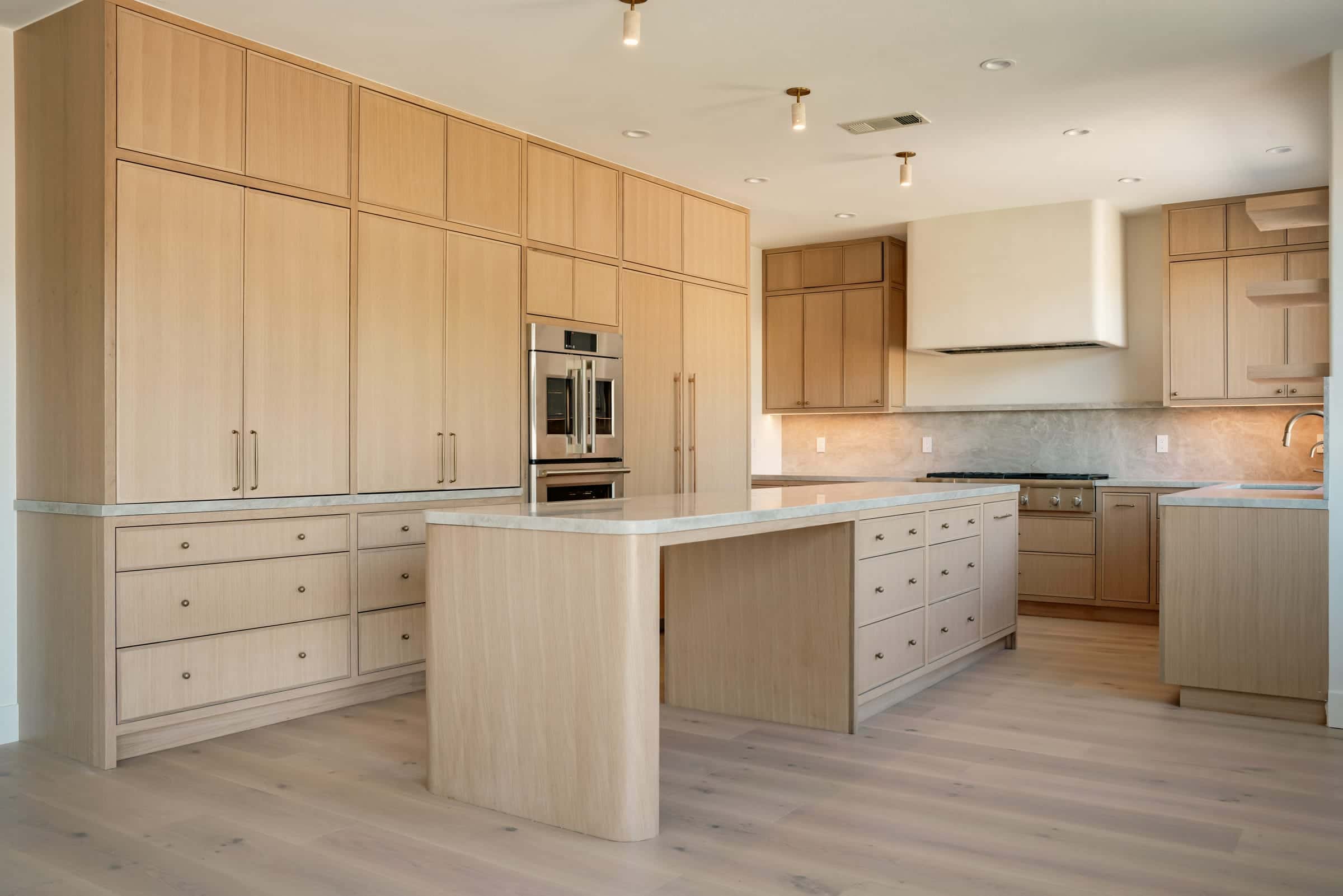
So don’t ask “can I see your work?” Ask “can I see a house you built on a lot like mine?” Then go and stand in it. Photos hide a lot. Door reveals, how the stone meets the plaster, whether the floors are flat: you see those in person.
Who actually runs the job
This is the question most people forget.
Ask who’ll be on site every day, how many other jobs that person is running, and how you’ll hear about progress. At RODO Development Inc., each job has a dedicated project manager and you get updates every week. Whatever the builder’s answer is, get it in writing. A good salesperson and a good superintendent are rarely the same person.
Design-build or bring your own architect
Both work. With design-build, one team carries design, engineering, permits and construction, so the drawings get priced while they’re still being drawn. With your own architect, you pick the designer first and bring a builder in for pricing. If you go that way, bring the builder in during design, not after the drawings are finished. Our guide to design-build vs. architect and builder covers the trade-offs, and our process page shows how a design-build job runs from first visit to final inspection.
How the price should be built
Be careful with a builder who gives you a firm number before there are drawings. They’re either guessing or planning to make it up in change orders.
A real price for a custom home is built from the drawings, line by line: site work, foundation, framing, roofing, windows, mechanical, electrical and plumbing, finishes. Each allowance (tile, fixtures, appliances) should be named, with an amount. If a line says “TBD”, ask what it’ll be based on. RODO Development Inc. gives a fixed, line-item proposal before construction starts; whoever you hire, compare proposals line by line, not bottom line by bottom line. For what moves the cost, read what drives custom home cost in Los Angeles, and for how the numbers firm up, see how design-build pricing works.
Read the change-order clause first
Every custom home has changes. Some you’ll ask for. Some the site forces on you.
The contract should say how a change is priced, who approves it, and that nothing gets built until you’ve signed it, with the cost and the effect on the schedule. That one clause predicts more about how the job will feel than anything in the brochure.
Questions to ask on the first call
- What’s your license number, and is it in this company’s name?
- Can I see a finished house on a lot like mine, and talk to that owner?
- Who’ll be on site every day, and how will I get updates?
- Do you handle permits, and which building department will review this lot?
- How do you price changes?
- What does your warranty cover, and is it in the contract?
Building on a lot in Los Angeles? Call RODO Development Inc. at (818) 610-9680, or read how we build custom homes in Los Angeles. We’ll walk the lot with you and tell you plainly what it allows.
General information only, not legal advice. Building codes, zoning and permit rules change and vary by property; we confirm the current requirements for your home during design. Any schedule or timeline we discuss is an estimate. The actual timeline depends on the final scope of work, design decisions, permits and inspections, and material availability.
Common questions
What license does a custom home builder need in California?
A Class B General Building Contractor license from the CSLB. You can look it up for free on cslb.ca.gov, along with the company’s bond and workers’ compensation status.
Should I hire the cheapest builder?
Compare proposals line by line first. A low total often means missing scope or small allowances that come back later as change orders.
Can a custom home builder work with my architect?
Yes. Bring the builder in during design so cost is checked while changes are still cheap and the drawings come out buildable.
How do I know a builder can handle a hillside lot?
Ask for a finished hillside home and the name of its structural and soils engineers, then visit it. Hillside work in LA brings soils reports, deeper foundations and stricter grading review.