
By Dolev Popovich, Founder & CEO
Published · Updated
Most bathroom problems are built in before the first tile goes up. A drain that ends up in the wrong spot. A vanity ordered before anyone measured the wall. Waterproofing that looked fine until the first winter. Almost all of it is avoidable, and almost all of it comes down to planning in the right order.
In the homes we build, the bathroom is usually a primary suite: the bath, the closet and the bedroom planned together, inside a whole-home remodel or a new addition. That changes how you plan it. Here's how we approach it, plus the mistakes we see most often.
Plan the suite, not just the bathroom
Start with how you use the space every morning and night. Two sinks or one long vanity? A tub at all? A walk-in shower big enough for a bench? Where does the closet go, and does it pass through the bath or sit beside it? Write down what bothers you about the current setup, then separate needs from wants. That list becomes the brief.
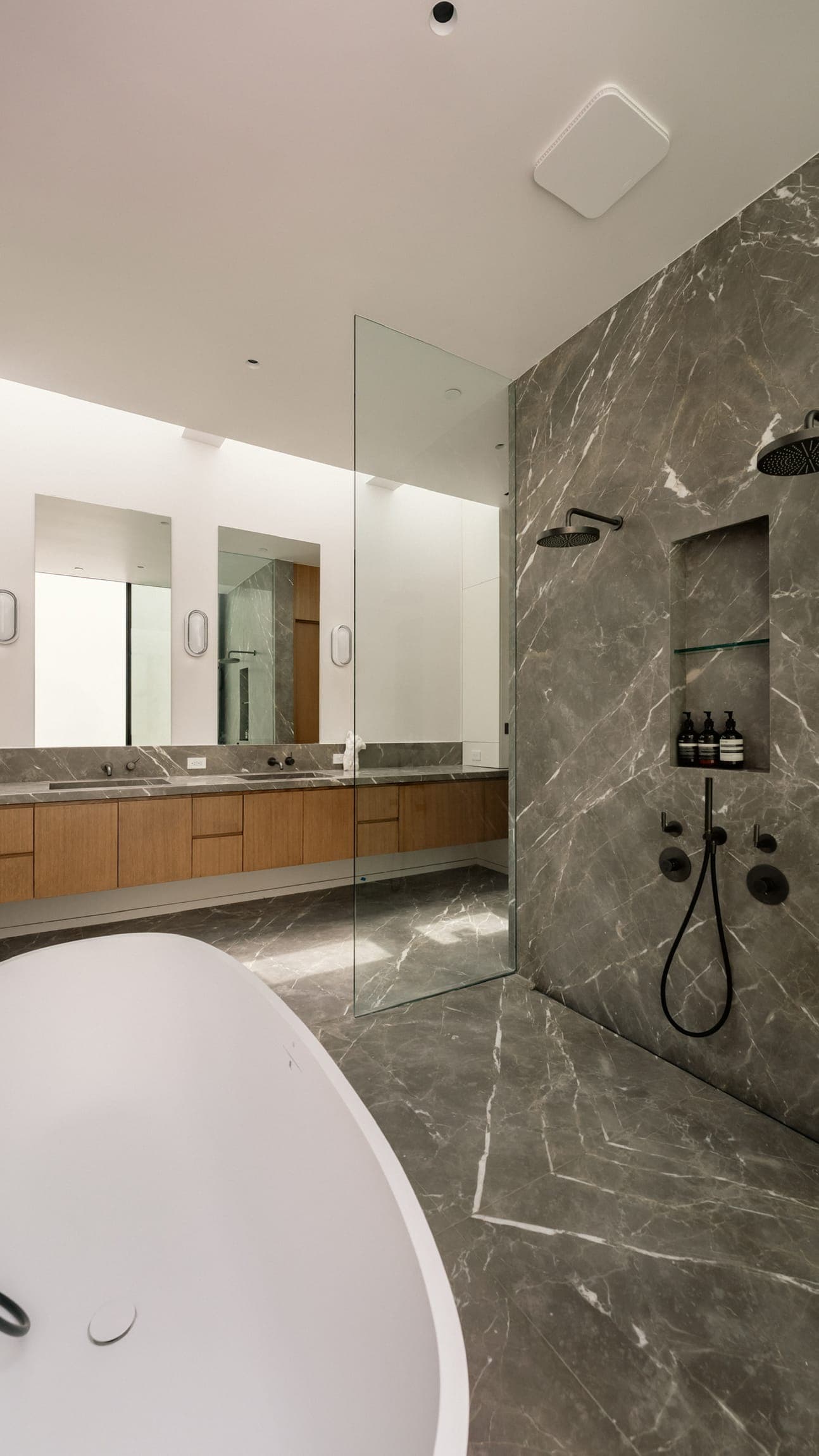
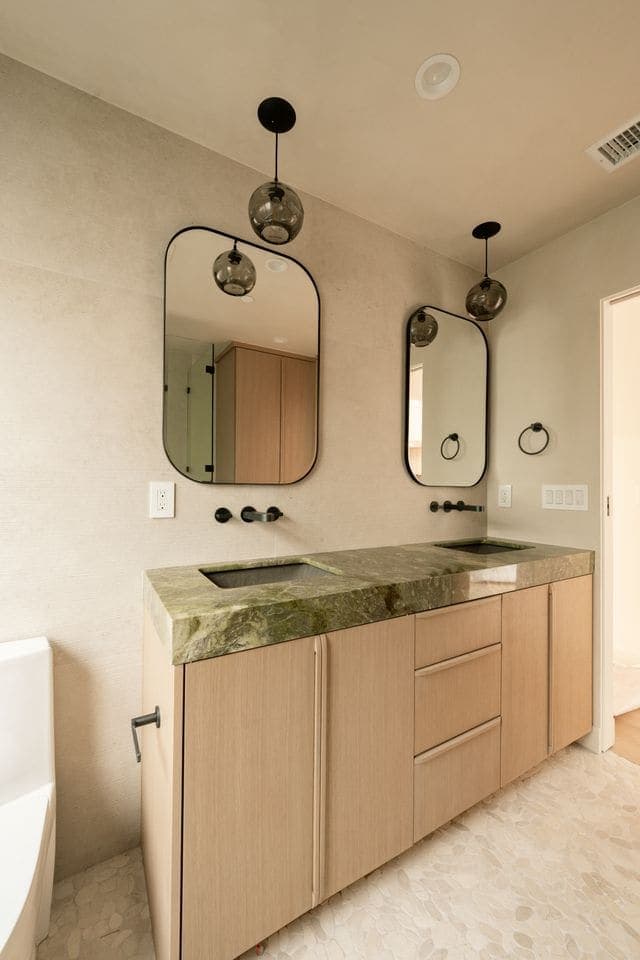
In a whole-home remodel or an addition, the suite can often be moved or enlarged, which a stand-alone bathroom job can't do. On our Woodrow Wilson project in the Hollywood Hills, the scope included both the primary spa bath and a primary walk-in closet with integrated millwork, built to designer OME DEZIN's plans.
Get the layout right first
Tight clearances between fixtures, a cramped shower or awkward circulation make a bathroom hard to live with, however good the tile. Storage too. Drawer vanities, recessed medicine cabinets and shower niches keep counters clear without crowding the room. Plan lighting and ventilation at the same time as the layout, not after.
Curbless and walk-in showers are often possible. Whether they are depends on the floor structure and where the drain can go; sometimes the subfloor is lowered or the floor is sloped to a linear drain. That's a framing decision, so it belongs in design.
Budget for what you can't see
The biggest bathroom costs are hidden: moving drains and supply lines, waterproofing, structural work, electrical for heated floors or a steam shower. A common mistake is choosing finishes without understanding what they cost to install, or spending on decorative extras while skimping on what keeps water out.
Keep a contingency for what's behind the walls (old leaks, aging pipes). In older LA houses, it's common to find something. A detailed line-item estimate that covers materials, labor and schedule shows each phase before work starts.
Waterproofing is its own stage
This is where the most expensive damage comes from, and it usually shows up only after the room is finished. We treat waterproofing as a dedicated stage: shower pans, walls and wet areas are done and checked before any tile is set, and rough plumbing is inspected before the walls close. Exhaust ventilation, protected (GFCI) outlets and safety glazing in wet areas are governed by code and confirmed at inspection.
Choose materials for a wet room
Porcelain is very durable and low maintenance. Natural stone is unique but needs sealing and care. Both work, room by room, if you know what you're signing up for. Pair them with moisture-resistant cabinetry and tops, and keep the finishes connected to the rest of the house so the bath doesn't feel like it belongs to another home. Our guide to durable materials goes deeper.
Finalize selections before demolition
Late selections are one of the most common reasons bathrooms run long. An undecided vanity or a back-ordered valve stops the plumber, then the tile setter, then everyone after them. Confirm tile, fixtures, vanities, lighting and mirrors before construction starts, and order long-lead items early.
Permits and the build sequence
In Los Angeles, a bathroom with plumbing, electrical or structural changes generally needs permits, and in a whole-home remodel or addition they're part of the main permit set. The work follows a set order: demolition, plumbing and electrical rough-in, inspections, waterproofing, tile, then vanities, fixtures, lighting and mirrors. Each trade has to leave the room ready for the next.
The mistakes we see most
- Demolition before decisions. Plumbing locations, lighting and storage should be resolved on paper before anything comes out.
- Spending on decorative finishes and cutting corners on waterproofing or ventilation.
- Hiring on price alone. A low bid that leaves out waterproofing, permits or supervision isn't a bargain. Our contractor guide explains what to check.
- Changing the plan mid-build without a written change order. Every change, in writing, with its cost and schedule effect.
The final walkthrough
Near completion, walk the room against the design. Check drainage, water pressure, lighting, fixtures, grout lines, caulking and paint. Everything gets finished before closeout.
Frequently asked questions
Do I need a permit for a bathroom remodel in Los Angeles?
Generally, yes, when the work includes plumbing, electrical or structural changes. In a whole-home remodel or addition, the bathroom is part of the project's permit set, and we handle plan check and inspections.
What is the most common bathroom remodeling mistake?
Starting without a resolved layout and budget. Deciding late leads to delays, extra cost and changes after tile is set, when they're most expensive.
Can I get a curbless shower?
Often. It depends on the floor framing and drain location; sometimes the subfloor is lowered or the floor sloped to a linear drain. It's decided during design.
How do you prevent leaks?
Waterproofing is a dedicated stage before tile, and rough plumbing is inspected before the walls close.
Plan your primary suite with us
Primary suites are planned and built as part of our complete home remodels and home additions. Get in touch and we'll walk the house with you.
General information only, not legal advice. Building codes, zoning and permit rules change and vary by property; we confirm the current requirements for your home during design. Any schedule or timeline we discuss is an estimate. The actual timeline depends on the final scope of work, design decisions, permits and inspections, and material availability.
All articles